

Written by Dr. Natacha Bonjout — Pharm.D. in Physiology of Skin Complexion, trained at Chanel Research Labs in Paris.
TikTok can turn an ingredient into a phenomenon in a weekend.
Sometimes that attention is deserved. More often, an interesting piece of science becomes a much larger promise by the time it reaches your feed.
I look at viral skincare trends the way I look at a formula. What is the evidence? Does the mechanism make sense? And does this actually change the way we should care for skin? Those are the three questions I apply to every trend.
One note before we start. I am a pharmacist and formulator, so I look at ingredients, formulas, and evidence through that lens. Where a trend crosses into diagnosis or medical treatment, I will say so, because that is where a dermatologist's guidance matters.
Here is my skincare trend analysis of the top 10 TikTok skincare trends, and where I think the line between science vs hype falls.
1. Exosome Serums: Promising, Far From Settled

The biology is fascinating. Fascinating biology is not evidence of topical efficacy.
Products sold as exosome skincare vary enormously in source, composition, manufacturing, stability, and delivery. They are not all derived from stem cells. That variation makes any broad claim about “exosomes” nearly impossible to evaluate from the outside.
There is also a regulatory distinction worth knowing. FDA states that exosome products intended to treat diseases or conditions generally require approval, and that there are currently no FDA approved exosome products. It has also warned about unapproved products marketed for medical or regenerative uses.
My take: scientifically interesting, but the marketing has moved faster than the evidence. I would not buy a product for the word alone.
2. Red Light Therapy: The Device Matters as Much as the Science

But red light is not a single standardized treatment. Wavelength, irradiance, total dose, distance from the skin, session length, and frequency can influence the result. Two masks can look identical and perform nothing alike.
FDA clearance is worth checking, but it is not the same as FDA approval and does not validate every claim a brand makes.
My take: real science behind the category. Judge the specific device and its evidence, not the category.
3. Glass Skin: Sound Principles, Too Many Steps

Glass skin describes the smooth, hydrated, luminous complexion popularized through Korean beauty.
The aesthetic may be new to some people. The principles behind it are not: gentle cleansing, appropriate exfoliation, hydration, barrier support, and daily sunscreen.
Where TikTok overshoots is in turning that into a sequence of essences, toners, serums, ampoules, creams, and masks. Skin does not need ten products because ten products appeared in a video.
My take: keep the philosophy. Drop the choreography.
4. Simplified, Multitasking Skincare: The One I Would Keep

This is less a trend than a correction.
It is not true that using several products damages your barrier on its own. The real problems are more specific: duplication, over exfoliation, combining irritating actives without knowing your tolerance, and routines so complicated that they become difficult to follow consistently.
A well built formula can do several complementary things at once. That is the principle I formulate around at Bonjout, fewer and more purposeful formulas rather than more steps. Le Balm is our version of that idea, one waterless solid serum in place of a longer sequence.
My take: worth keeping long after TikTok moves on.
5. Barrier Repair: More Than a Trend

The skin barrier has become beauty's favorite phrase. For once, the attention is deserved.
The stratum corneum and its lipid matrix limit water loss and protect skin from outside stress. Ceramides, cholesterol, and fatty acids are important components of that structure.
You will see a specific lipid ratio quoted online as though it were a universal recipe. Those ratios have been studied in particular formulas and particular contexts. They are not a checklist for judging every product on a shelf.
What matters is the complete formula and everything around it: lipids, humectants, emollients, how you cleanse, and whether the rest of your routine is creating irritation.
My take: barrier support is foundational skincare, not a season.
6. Electrolyte Skincare: Interesting, Not Essential

Sodium, potassium, magnesium, and calcium are essential to biology. Printing the word electrolytes on a moisturizer does not make that moisturizer more hydrating.
Minerals can play useful roles inside a formula. The evidence that an electrolyte led product hydrates better than an established system of humectants and barrier lipids is thin.
For hydration, I would still look at the whole formula: glycerin, hyaluronic acid, emollients, and lipids that support the barrier.
My take: a formulation component, not a reason to buy.
7. Beef Tallow: Natural Does Not Mean Better

Beef tallow is rendered animal fat containing fatty acids and lipid soluble compounds. That tells you what is in it. It does not tell you what it does on a face.
Research evaluating tallow specifically as a facial skincare ingredient is limited. And a fatty acid profile that resembles human sebum is not the same thing as being interchangeable with it.
I am most cautious about homemade and unstandardized preparations, where purity, oxidation, preservation, and manufacturing conditions are unclear.
My take: there are well characterized cosmetic emollients with far more data behind them. Ancestral is not a synonym for proven.
8. Scar Care: Know What You Are Treating

TikTok uses the word scar for several very different things. The mark left after a breakout is post inflammatory pigmentation, not an atrophic acne scar, and neither one is a raised surgical scar.
That distinction helps determine what may actually help. Silicone gels and sheets have evidence behind them for certain raised scars. Other types call for different approaches, often professional ones. Sun protection matters throughout, because UV exposure can make discoloration in healing skin more noticeable.
My take: this is diagnosis territory rather than product recommendation territory. For anything persistent, see a dermatologist.
9. Kids' and Teens' Skincare: Simpler Is Better

Children do not need anti aging routines.
The tween skincare trend often introduces potent actives designed for concerns many young users do not have, increasing the risk of irritation without clear benefit.
For most tweens, the American Academy of Dermatology recommends a gentle cleanser, a simple moisturizer, and broad spectrum sunscreen, while advising against unnecessary retinol, vitamin C, and exfoliating acids. Specific concerns such as acne may call for targeted treatment.
My take: teaching a child to cleanse, moisturize, and wear sunscreen is a real gift. Teaching a ten year old that aging is something to fight is not.
10. Clean and Nontoxic Beauty: Question the Label
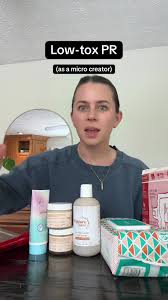
Clean may be the most persuasive word in modern beauty. It is also one of the least defined. There is no standard telling you what a clean product contains or excludes, so every brand writes its own rule.
Natural does not establish safety either. The FDA has been clear that an ingredient's source does not determine whether it is safe. Synthetic is not a synonym for toxic, and natural is not a synonym for harmless. An appropriate preservation system can play an essential role in protecting a formula from microbial contamination.
The better questions are narrower. Which ingredient? At what concentration? For what purpose? With what evidence? In what finished formula?
My take: transparency is worth demanding. A fear based ingredient list is not the same thing as formulation science.
The Bonjout Take
TikTok beauty science is very good at discovery and very poor at nuance. A mechanism becomes a miracle. An ingredient becomes a category. A before and after becomes evidence.
These are my pharmacist's notes on the lot of it, and evaluating viral skincare comes down to the same few principles every time. Protect the barrier. Wear sunscreen. Use targeted actives when they have a purpose. Avoid unnecessary irritation. And judge a product by the quality of the complete formula rather than the popularity of a single ingredient.
Trends move quickly. Skin biology does not.
📚 Continue Reading

Shea Butter: The Cozy Blanket Your Skin’s Been Begging For
Shea butter, a natural fat extracted from the shea tree nut, offers various cosmetic and medicinal benefits due to its rich fatty acid and vitamin content, including moisturizing, anti-inflammatory, and wound-healing properties.

Unveiling the Secret Ingredients of French Pharmacy Serums
Learn One of The Secrets to Juicy, Youthful Skin

Unlock the Overnight Miracle: The Truth About Beauty Sleep
The article explains the scientific basis of "beauty sleep," highlighting the crucial role of sleep in skin repair, collagen production, and overall skin health, leading to a more youthful and radiant appearance.