

By Dr. Natacha Bonjout, Pharm.D. in Physiology of Skin Complexion, trained at the Chanel research labs in Paris.
An ingredient list tells you what is in a product. It does not tell you how well the product works.
Both of those things are worth knowing, and only one of them is printed on the box. Here is how to read the part that is.
What Is an INCI List?
INCI stands for International Nomenclature of Cosmetic Ingredients. It is the standardized naming system used on cosmetic labels worldwide.
The point is consistency. One ingredient can have a consumer name, a chemical name, a botanical name, and several trade names. INCI gives it one name that reads the same in every country.
Vitamin E appears as Tocopherol. Shea butter appears as Butyrospermum Parkii Butter. Squalane appears as Squalane.
One thing to know from the start: an INCI name identifies an ingredient. It does not approve it. Having a name on the list says nothing about whether that ingredient is safe, effective, or well used in that particular formula.
Why Understanding Cosmetic Ingredient Labels Matters
The label shows you what is in a product beyond the two or three ingredients printed on the front.
That is useful when you have a known sensitivity, when you are looking for a specific ingredient, when you want to avoid one, or when you are comparing two formulas that make similar promises.
It is the difference between what a brand chose to tell you and what it had to tell you.
Are Ingredients Listed in Order of Concentration?
Partly.
Under US labeling rules, ingredients above 1% are listed in descending order. Below 1%, they can appear in any order, and color additives follow their own rules.
So the first few names tell you something real about how a formula is built. After that, the order stops meaning much. You cannot read percentages off a label, and anyone who tells you they can is guessing.
A Guide to Reading Skincare Ingredients
Read a list in groups, not one name at a time. Four steps.
1. Start with the ingredients listed first. They can give you clues about the architecture of the formula. A conventional emulsion may begin with water alongside humectants, emollients, or other functional ingredients. An oil-based formula may begin with oils or esters. A waterless balm may be built primarily from oils, butters, waxes, and other lipid-soluble ingredients.
But do not assume the first five ingredients tell you everything. In the U.S., ingredients present at 1% or less can be listed in any order after those above 1%.
2. Sort the rest by job. Humectants such as glycerin and sodium hyaluronate pull water in. Emollients such as squalane and shea butter soften the surface. Lipids such as ceramides support the barrier. Emulsifiers hold oil and water together. Waxes build texture and hold it. Preservatives protect anything containing water. Actives such as peptides do the treatment work.
3. Do not dismiss the functional ingredients. An emulsifier has no marketing appeal and no glamour. Without it, the formula separates in the jar.
4. Look for what is missing. A water-based formula with no preservative is a problem, not a virtue.
Does the First Ingredient Matter Most?
No, and this is the most common mistake people make with a skincare ingredient list.
An ingredient at 20% is not more important than one at 0.5%. They work at different concentrations because they are different molecules. Some ingredients, including certain peptides, are designed to be used at very low concentrations. Water fills a large share of most creams because it is the solvent that carries everything else.
Concentration matters. Concentration without context tells you almost nothing.
Is Water in Skincare Just Filler?
No. In an emulsion, water is structural.
It dissolves the water-soluble ingredients, it carries them, and it decides how the product feels on skin. La Cream is built that way, and it works because of that architecture rather than in spite of it.
The real question is not whether a formula contains water. It is whether the formulator chose the format on purpose.
What Waterless Means for Le Balm
Le Balm was deliberately built without a water phase. Not to make a point about water, but because we wanted to create a concentrated solid serum with a very different formulation architecture.
Within that waterless format, Le Balm brings together 68 actives, including oils, lipids, peptides, amino acids, hyaluronic acid, and 1.5 million native plant cells per jar. On an ingredient list, six of them are worth knowing.
-
Squalane. An emollient that softens the surface and sits well within the skin's own lipids.
-
Ceramide NP. A skin-identical lipid that supports the barrier and slows moisture loss.
-
Sodium Hyaluronate. A form of hyaluronic acid, for hydration and a plumper look.
-
Palmitoyl Tripeptide-1. A peptide, for the appearance of smoother and firmer skin.
-
Prickly Pear Native Cells and Seed Oil. Plant cells to boost renewal, plus an organic cold-pressed oil that nourishes with omega fatty acids.
-
Blue Bird Hibiscus Native Cells. Plant cells that support skin renewal and refine texture.
No single one of them explains Le Balm. The formula is the relationship between them.
What Skincare Product Labels Cannot Tell You
This is the part worth remembering.
An ingredient list does not tell you the exact concentration of most ingredients, the grade or quality of a raw material, the molecular weight of something like hyaluronic acid, how an ingredient was processed, how the ingredients behave together, or how stable the formula stays over two years in your bathroom.
Two products can share most of their INCI names and behave nothing alike. That difference is formulation, and it does not appear on any label.
Does a Longer Ingredient List Mean a Worse Formula?
No. A short list is not automatically clean and a long one is not automatically cluttered.
Some formulas are deliberately minimal. Others need more ingredients because they are doing more jobs at once. The count tells you nothing on its own.
Our position is not that fewer ingredients are better. It is that fewer, better formulas are better, and that every ingredient inside them should be there for a reason.
Can You Tell Whether a Product Is Safe From Its Ingredient List?
You can spot something you already know to avoid. That is the useful part.
You cannot judge the safety of a whole formula from its list. Safety depends on concentration, how often the product is used, where it is applied, the toxicological data behind each ingredient, and the finished formula as a whole. This is why I am careful with any system that reduces a product to a single ingredient score.
What About Ingredient-Scanning Apps?
They are good at one thing: telling you what an unfamiliar name is.
They are less good at the rest, because a score cannot see concentration, formulation, or how ingredients behave together. Different apps use different methods and reach different conclusions about the same product.
Le Balm and La Cream both score 100/100 on Yuka. That is real, and I am glad of it. It is still a measure of what is on the list, not of how the formula performs.
The Bonjout Take
Learning to read an ingredient list is worth the effort. It moves you past the front of the package and shows you what you are actually buying.
It will not tell you how much of anything is in there, how good the raw materials are, or how the whole thing behaves on your face. That is the formulator's work, and it stays invisible.
So read the ingredients. Then judge the formula.
📚 Continue Reading

Ask a French Dermatologist: Is It More Effective To Exfoliate On Dry Or Wet Skin?
A French dermatologist recommends exfoliating on damp skin to minimize irritation and maximize product effectiveness, as opposed to dry or wet skin.

The French Diet Skin Care Connection: Foods That Enhance Your Complexion
French skincare prioritizes minimalist, elegant formulations focusing on efficacy and addressing specific concerns, while Korean skincare emphasizes multi-step routines and preventative care for overall skin health.
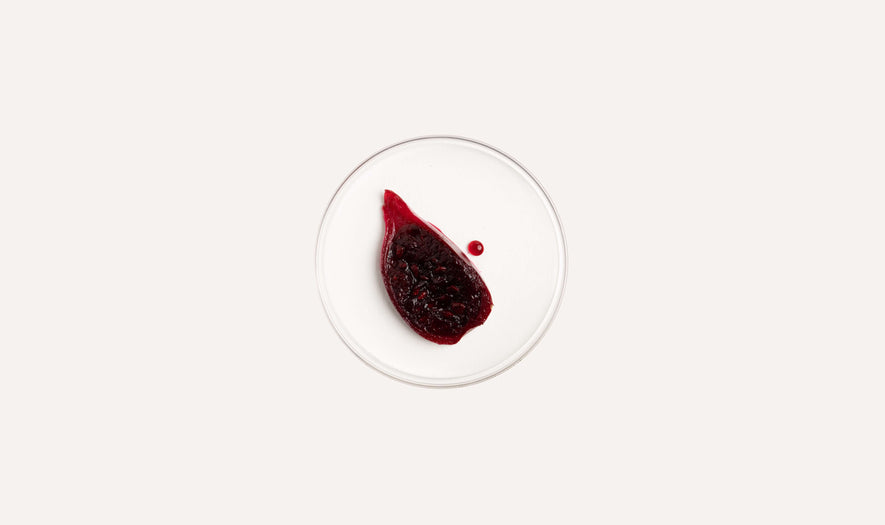
Prickly Pear Native Stem Cells in Skincare
BonJour Beauty's article discusses the benefits of prickly pear's native cells in skincare, highlighting their potent antioxidant and anti-aging properties due to their high concentration of vitamins and ability to protect against environmental stressors.